


ORTHODOX CHRISTIANITY - ETHIOPIA
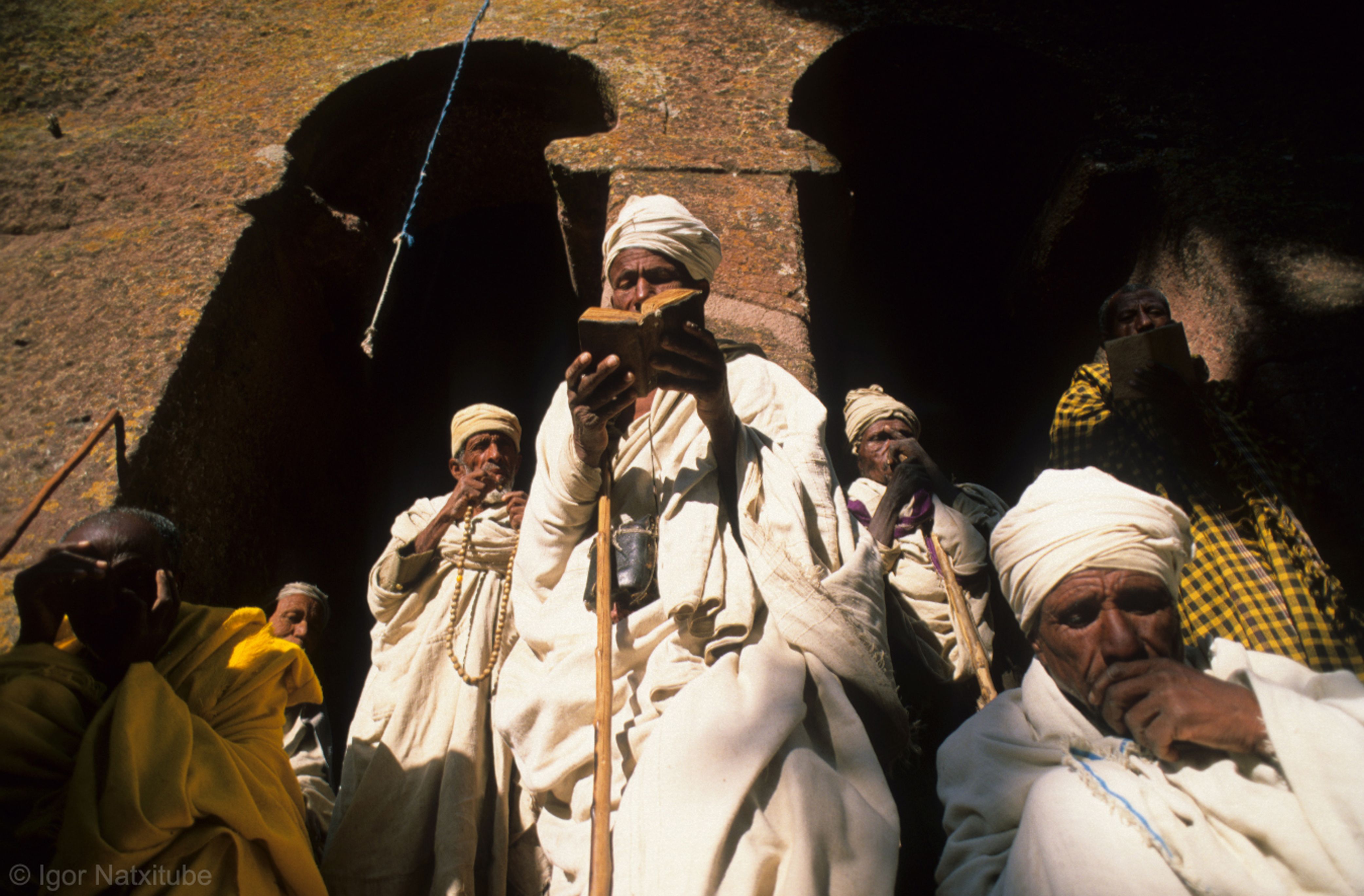
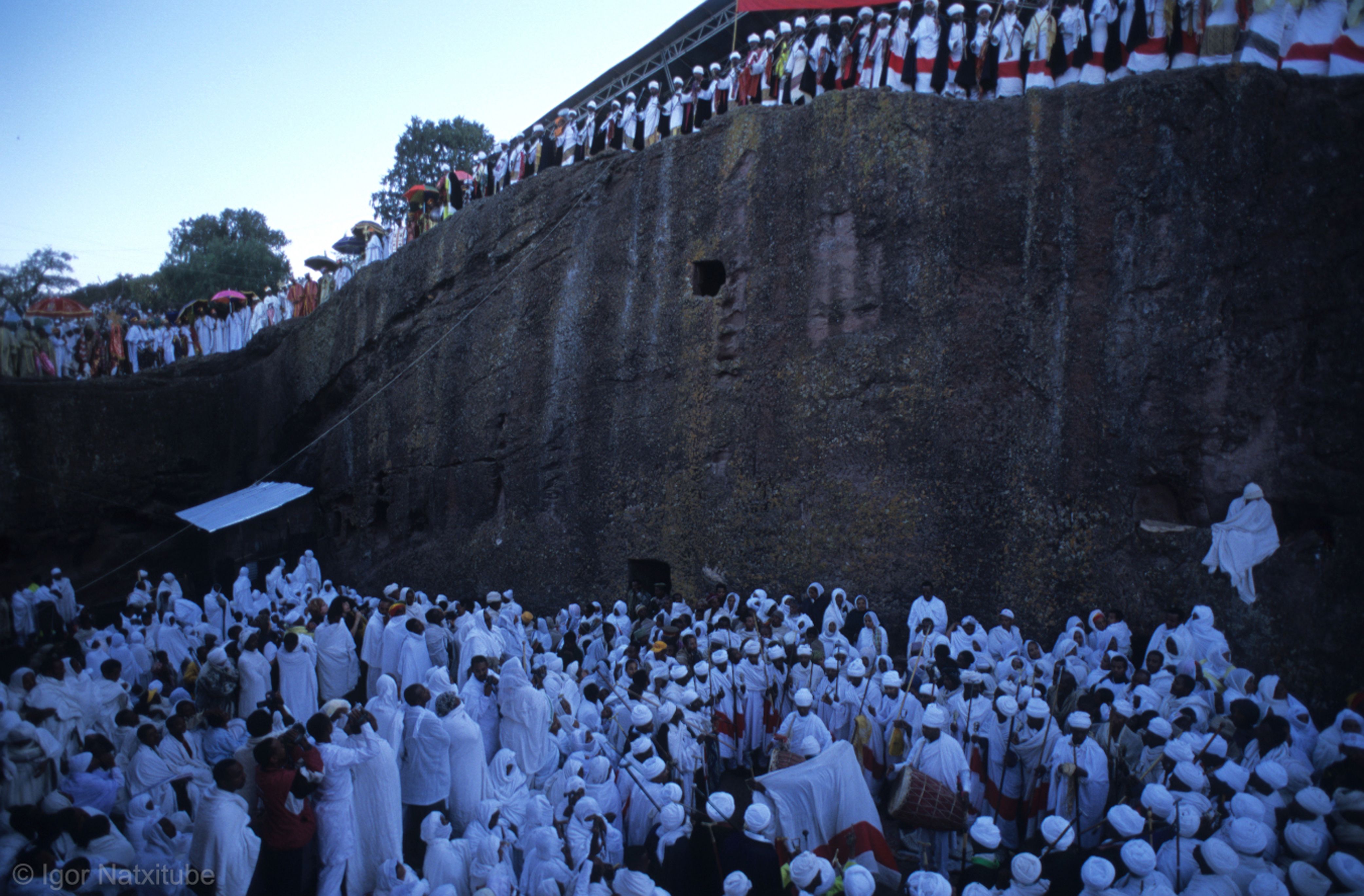
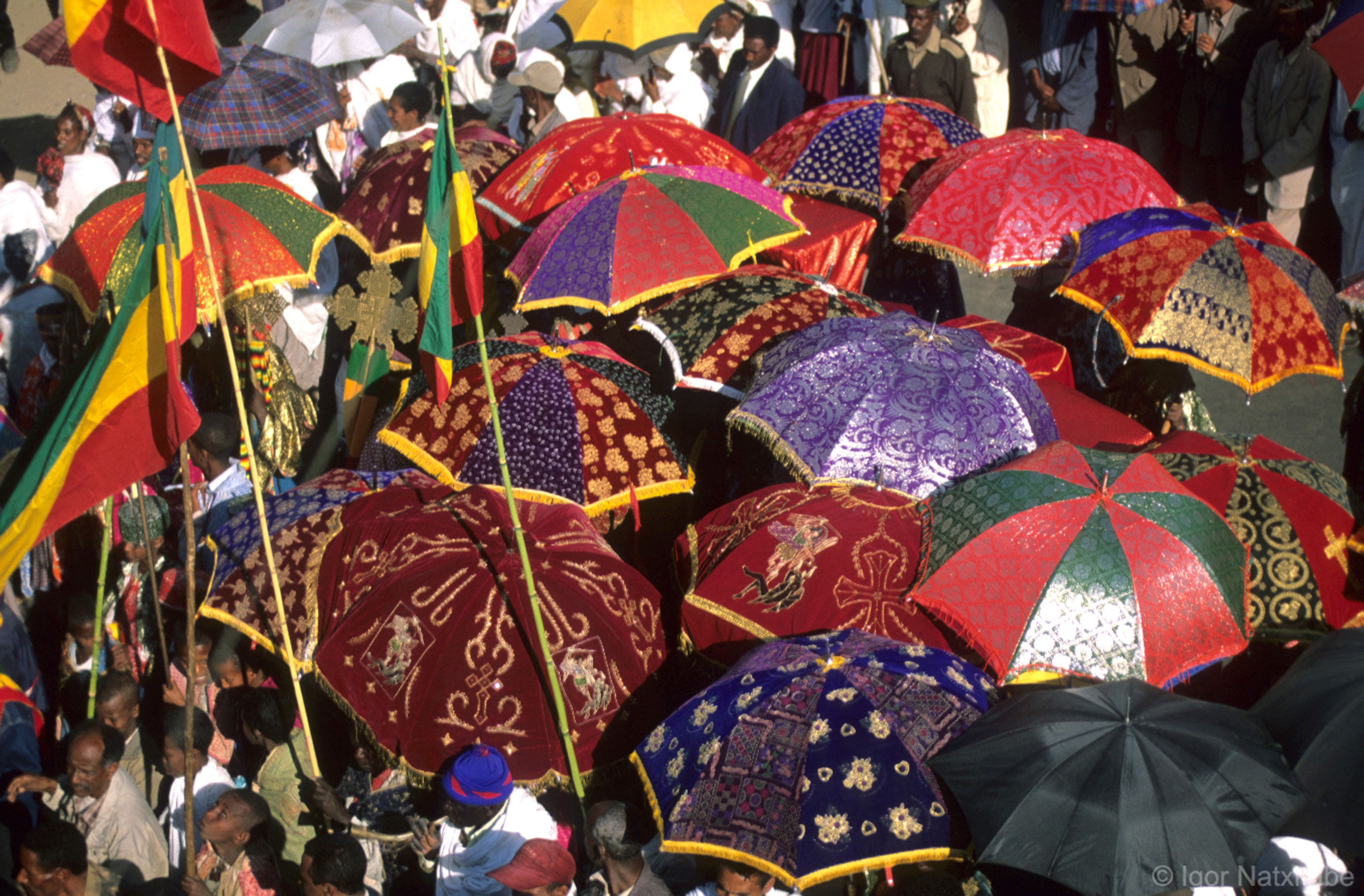
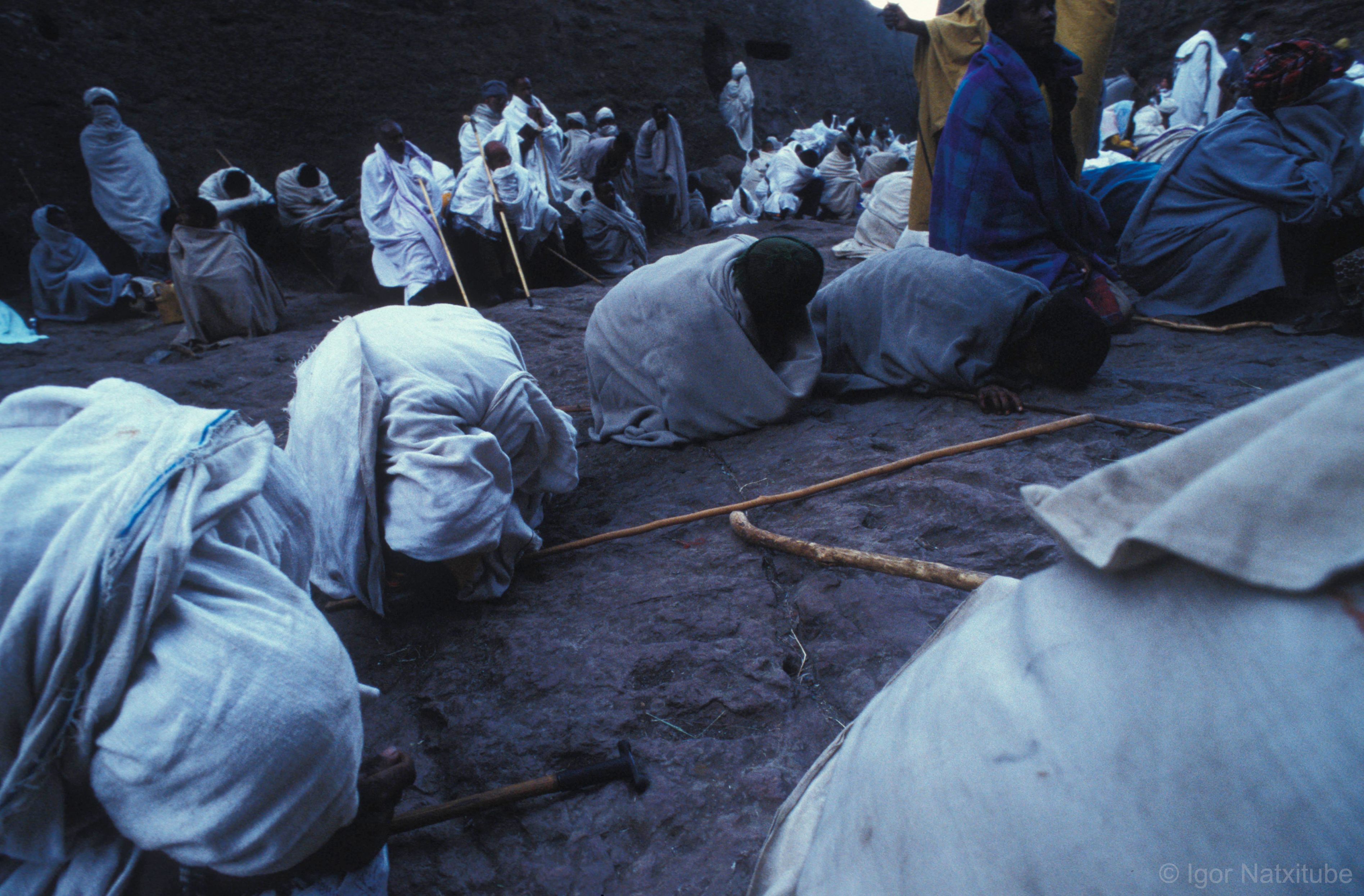
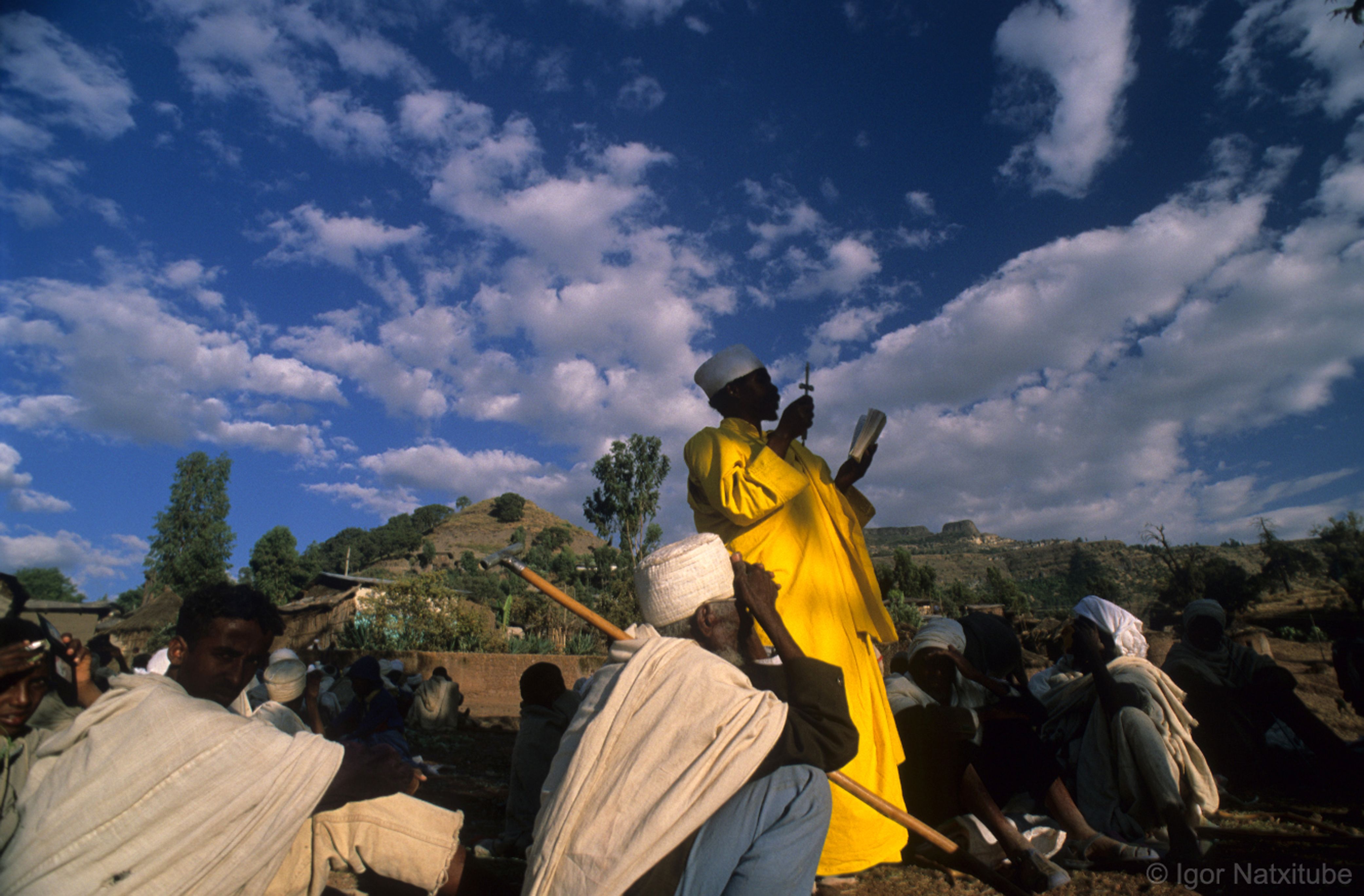
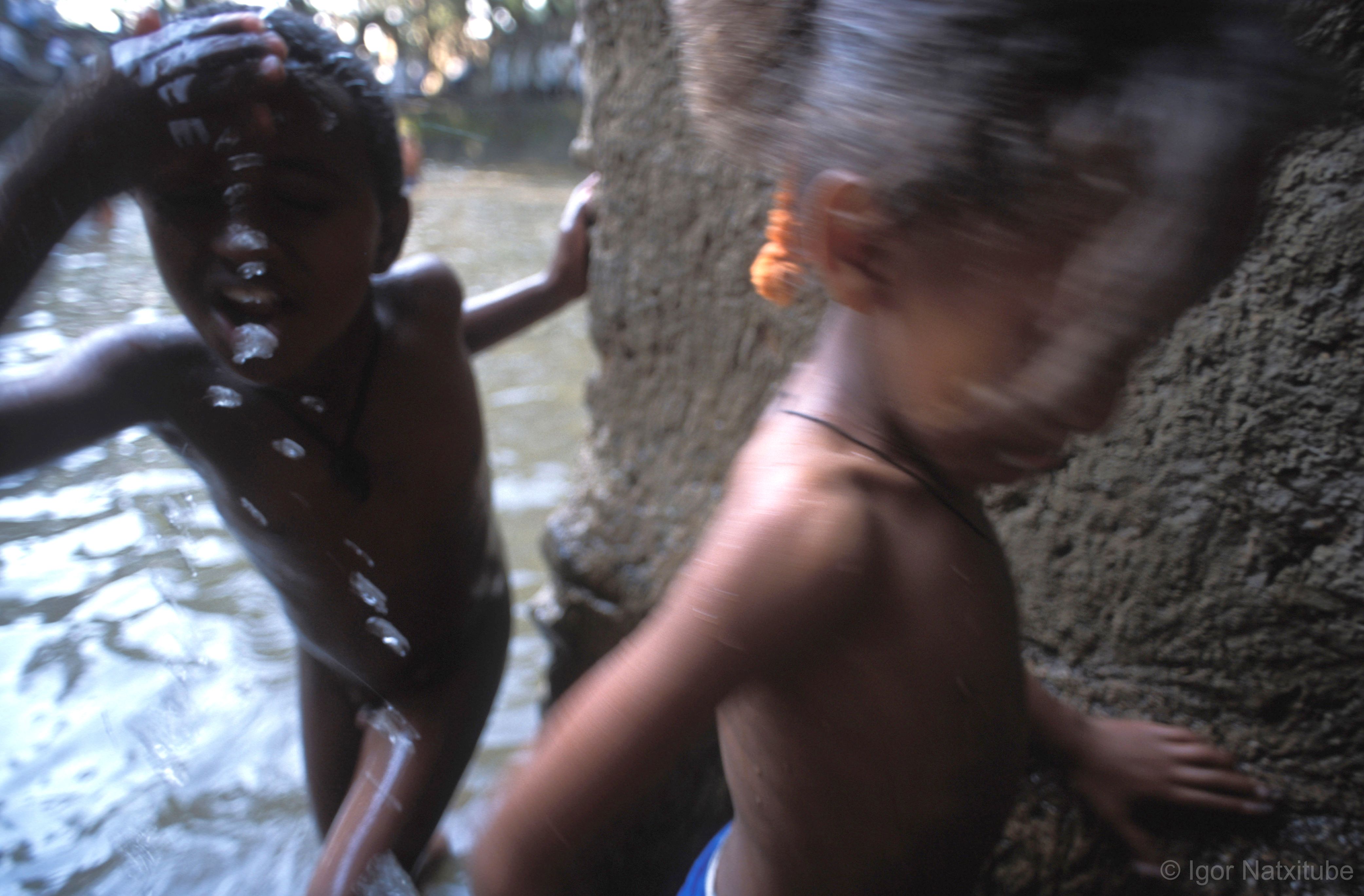
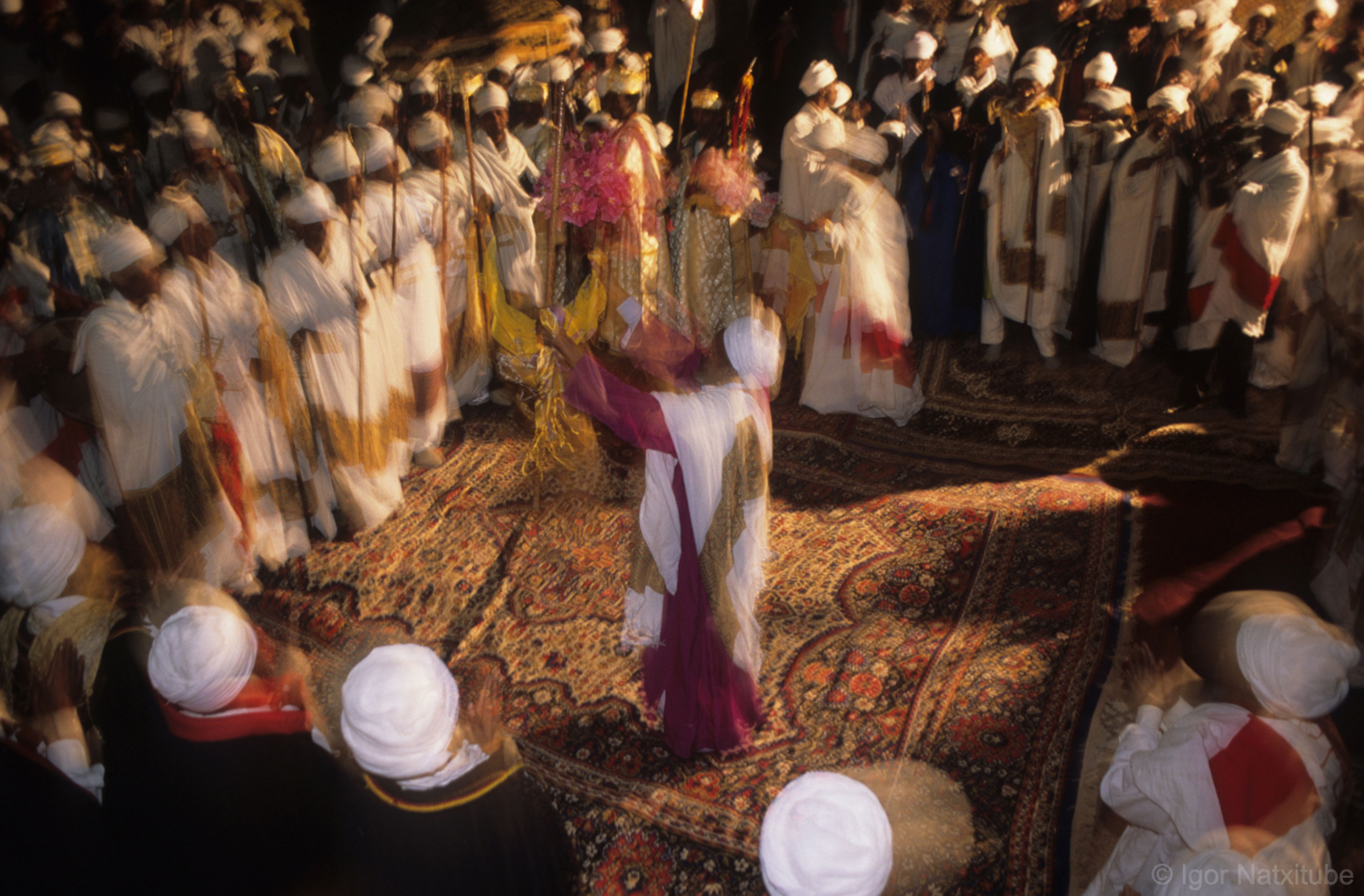
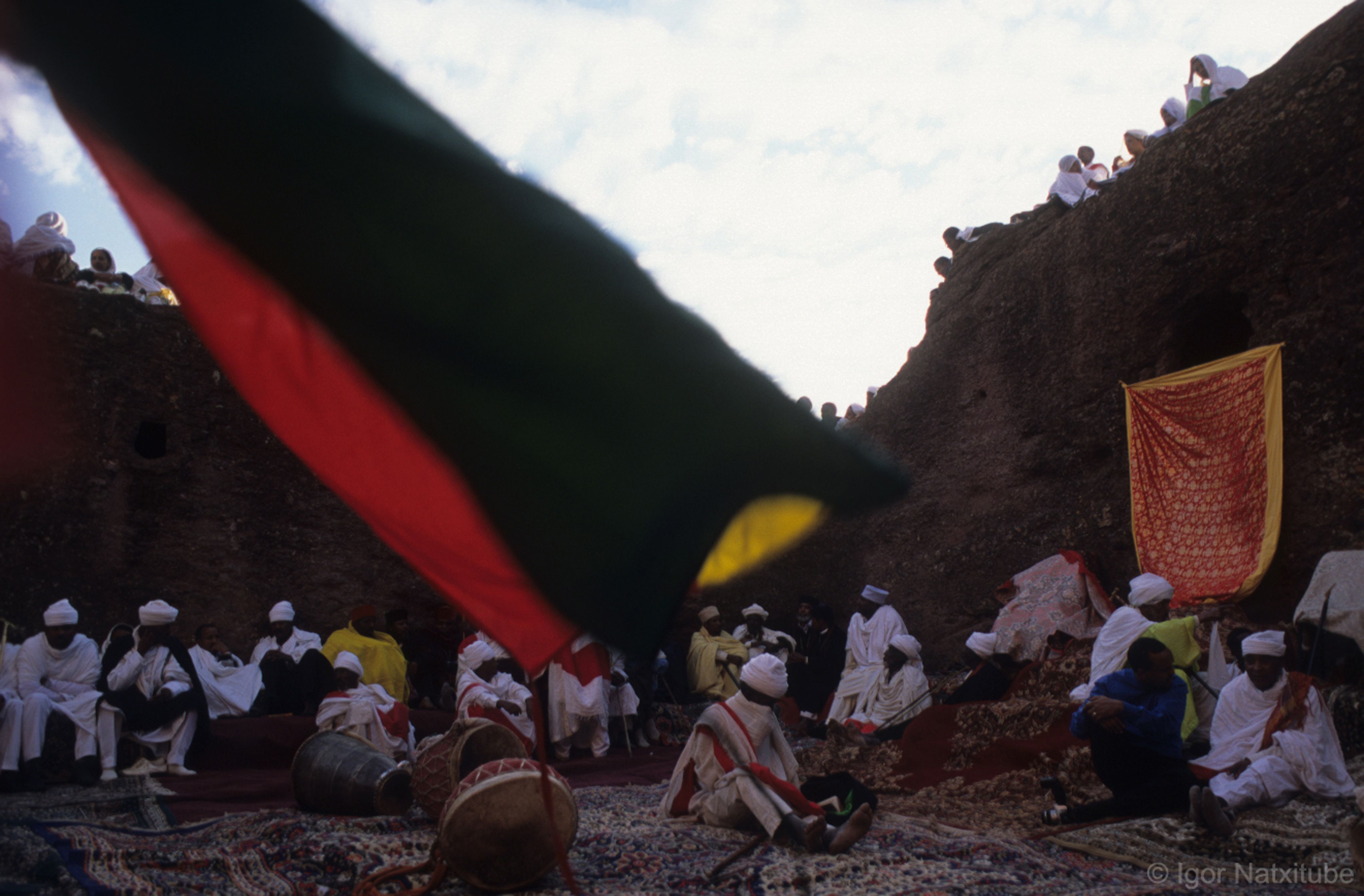
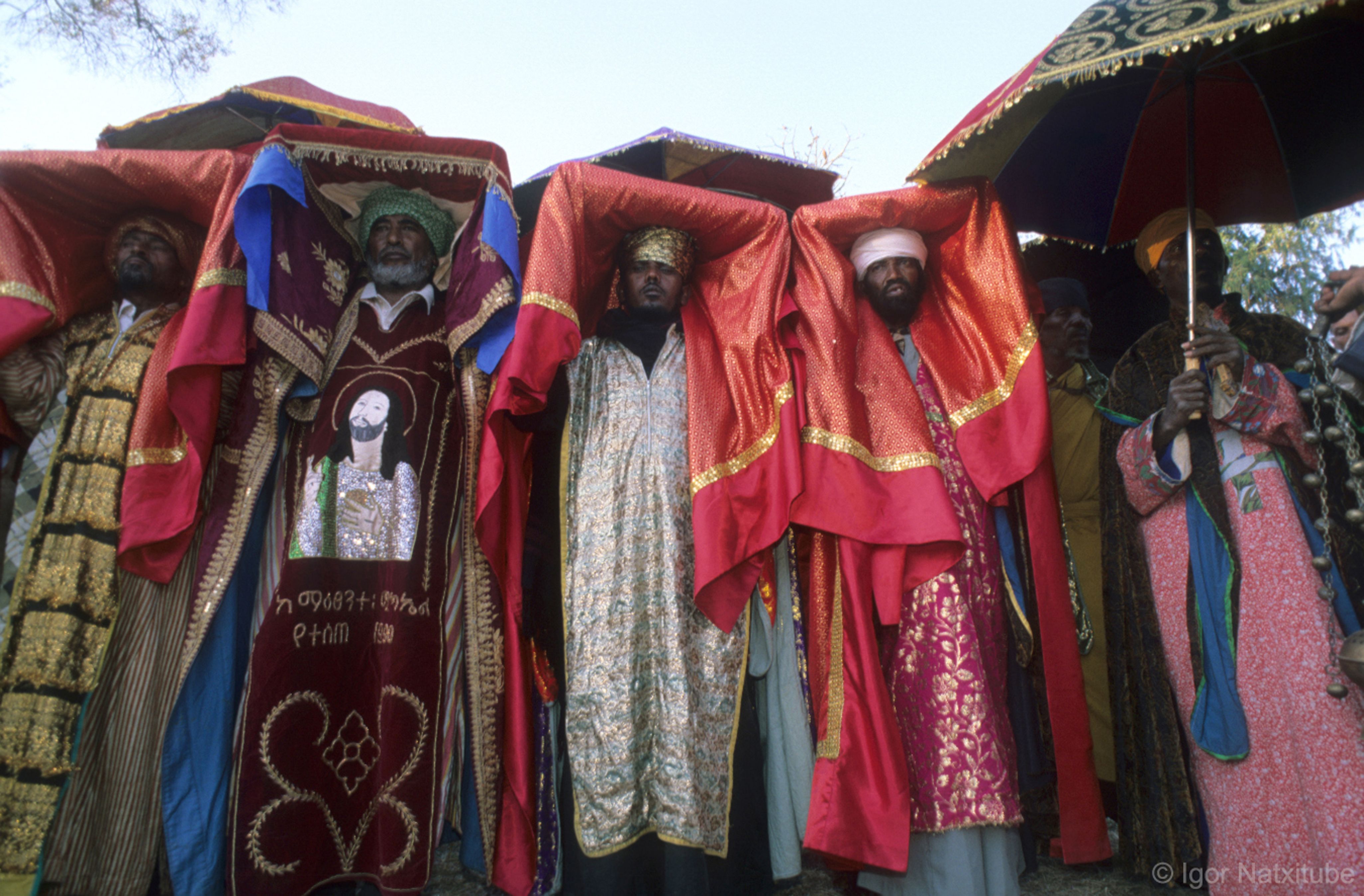
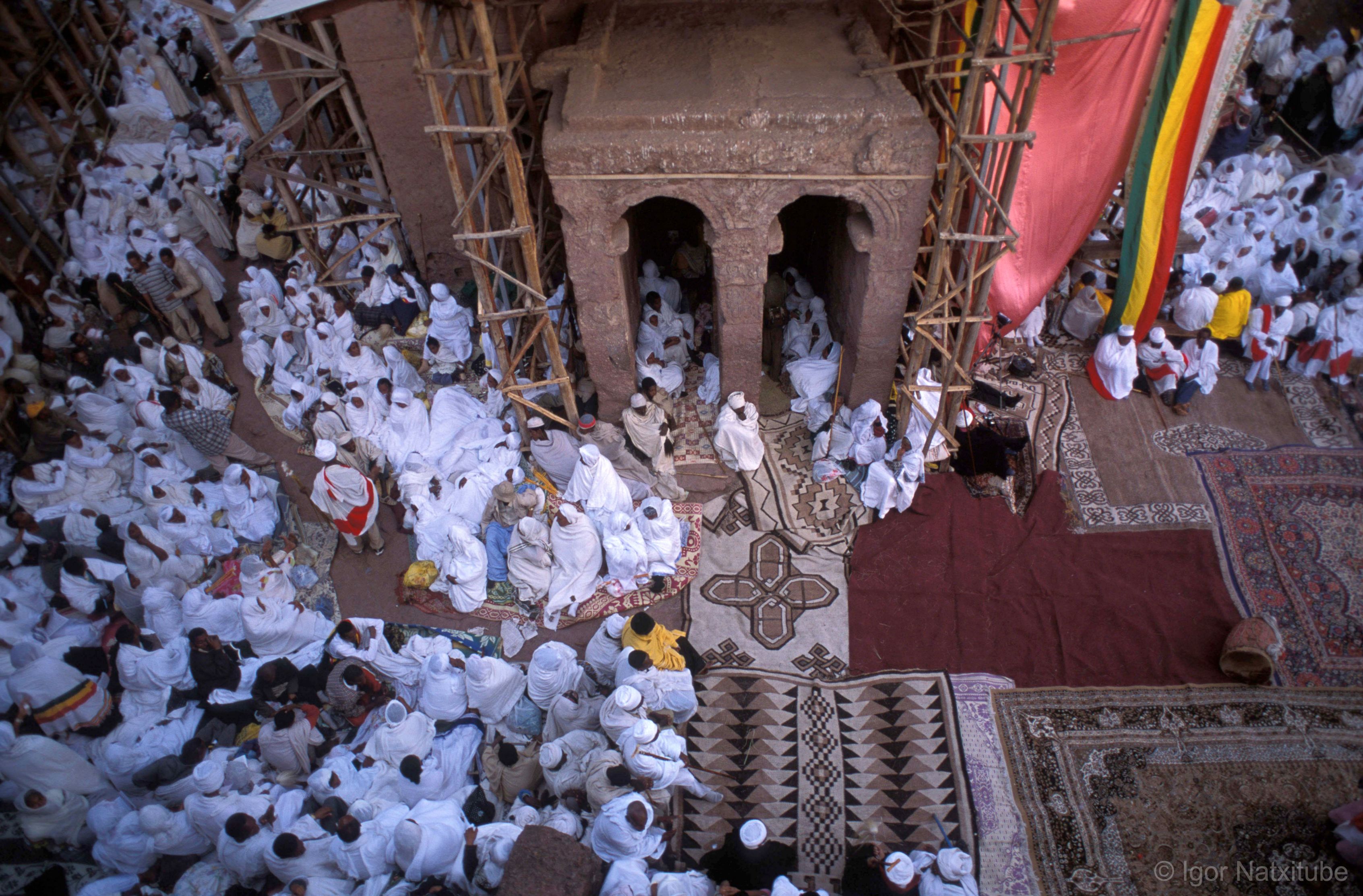
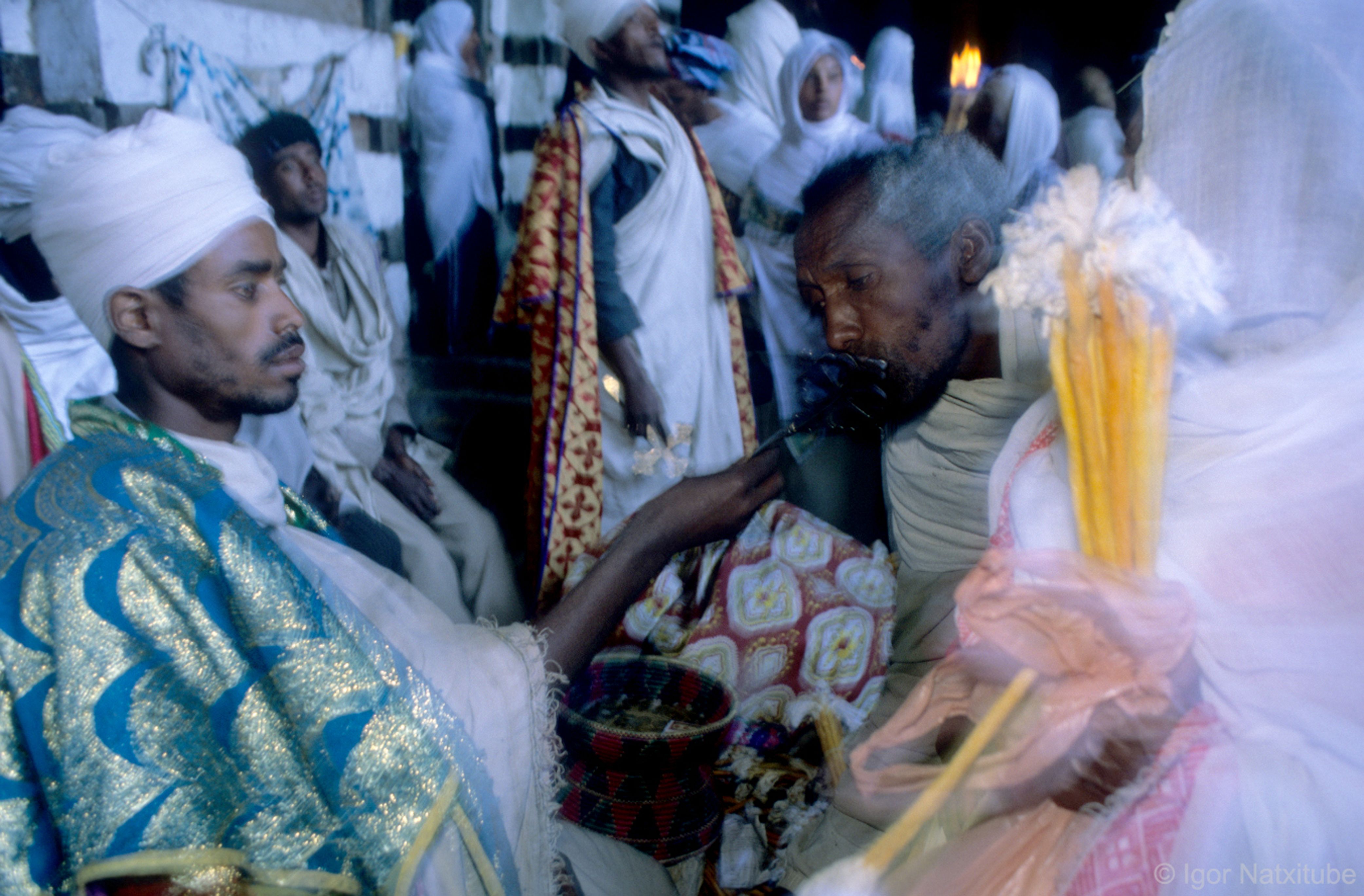
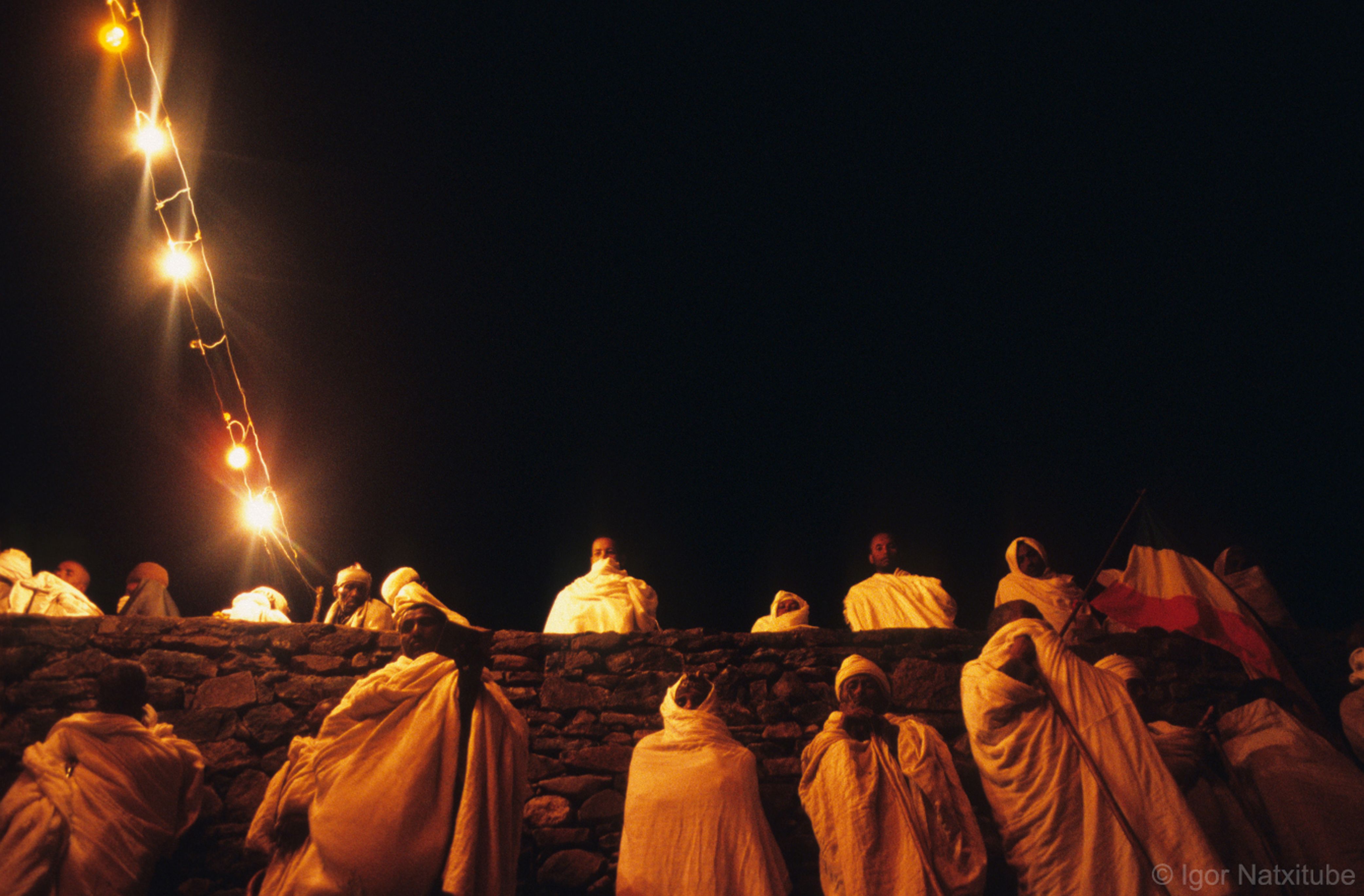
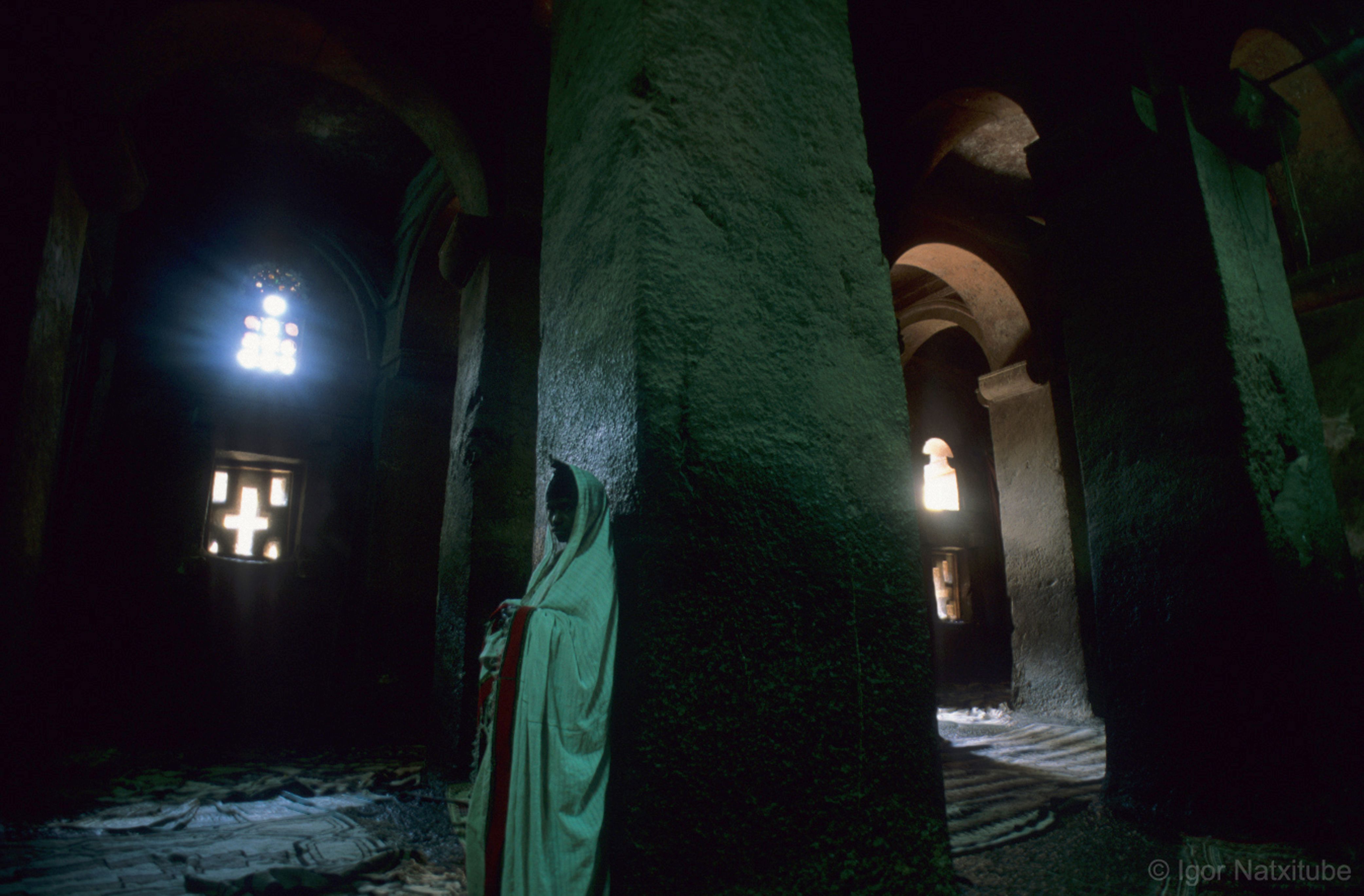
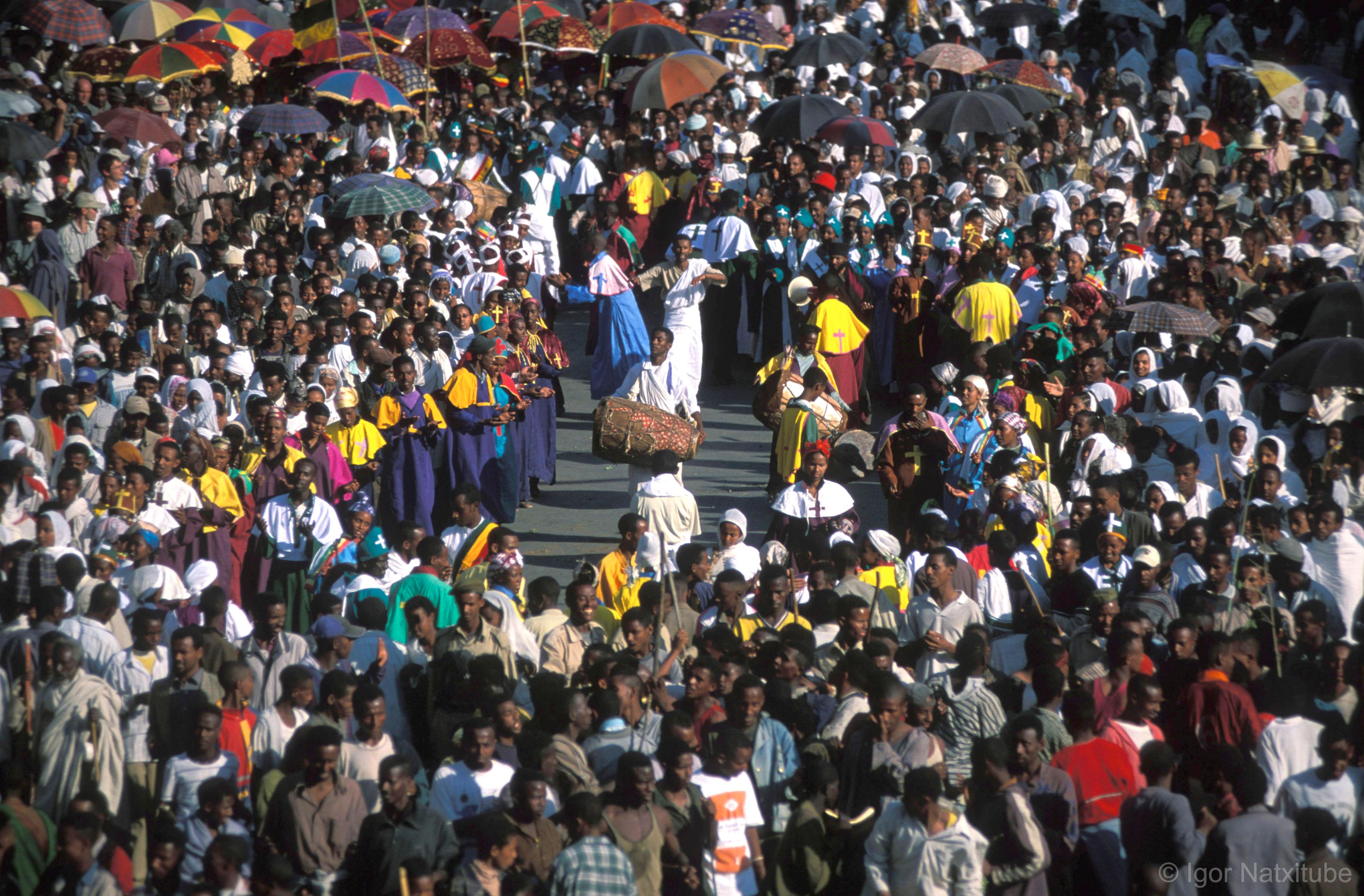
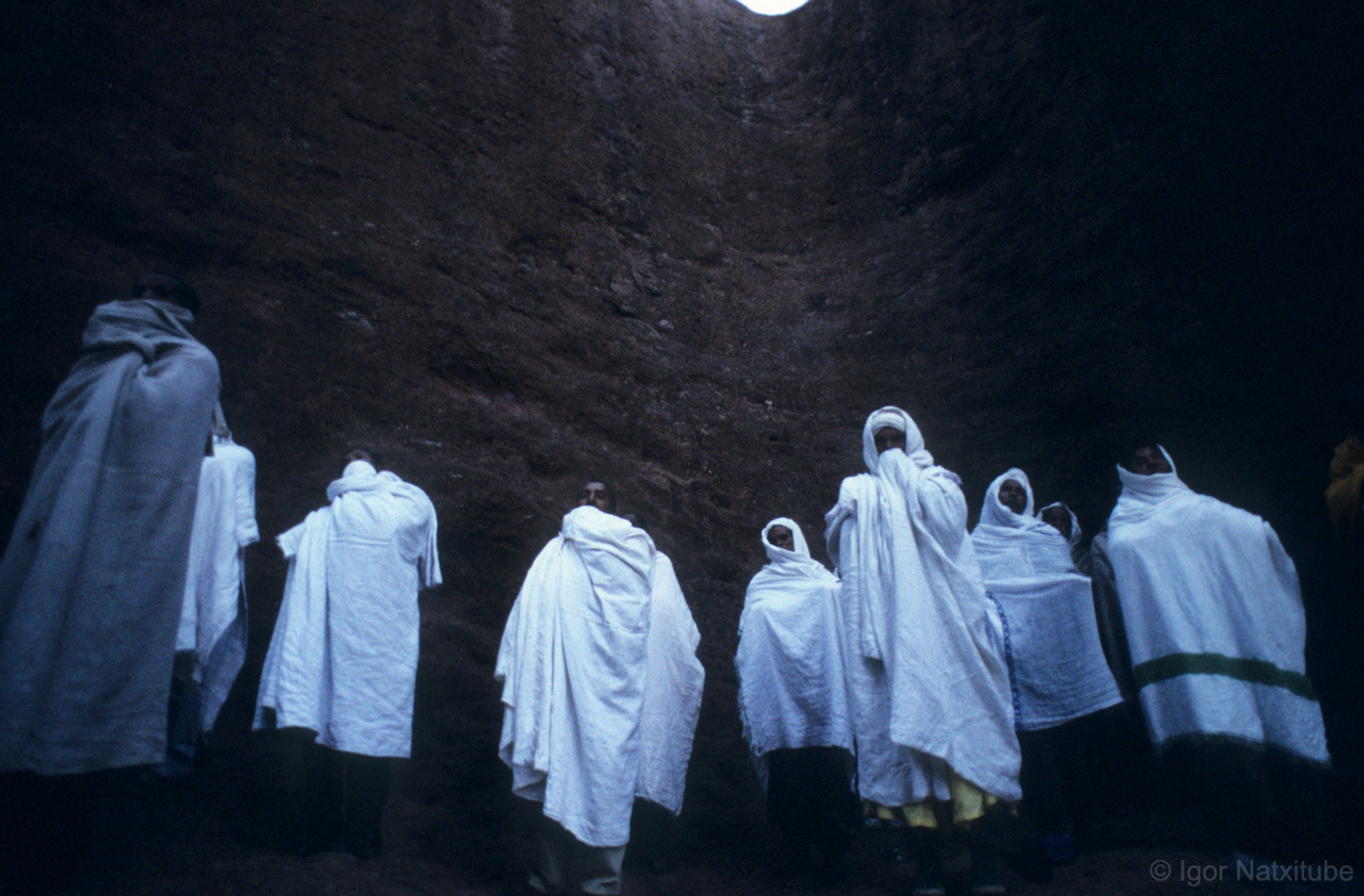
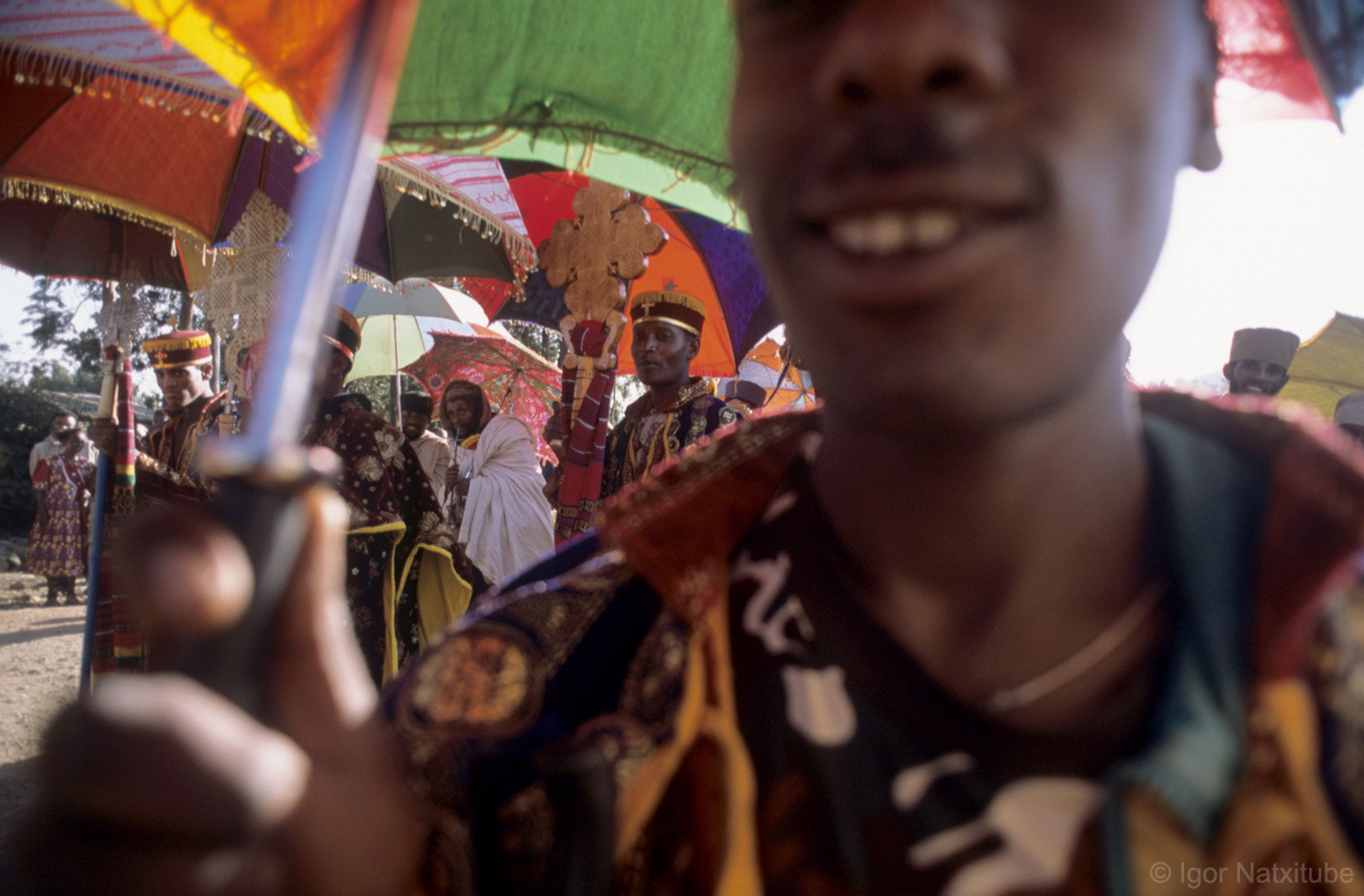
Without a doubt, Lalibela is for ethiopian orthodox christians the holy place par excellence. Located at an altitude of 2,630 meters and surrounded by mountains, it is known as "The Black Jerusalem" or "The Petra of Africa". It is a group of 11 churches built in the 12th century with the particularity that they were carved and excavated on the natural rock of volcanic origin. All of them are linked by corridors, tunnels, doors creating a labyrinth of paths in search of recollection and faith. Every year 3 major events are celebrated from the social, religious and human point of view. It is the Ethiopian Christmas celebrated on january 7, the Epiphany or Timkat commemorating the baptism of Christ in the waters of the Jordan on january 19 and finally the Ethiopian Easter. In all of them there is a religious exodus of the people from the countryside, the pilgrims, who, accompanied only by their tunics, venture to walk for weeks from their villages. The physical state in which they arrive is sometimes unfortunate, but the most important thing for them is to arrive, breathe the atmosphere, touch the walls of the churches, kiss the crosses, the walls and pray in front of Bieta Maryam, one of the most revered. In addition to the humble pilgrims, faithful believers come from all over the country, creating a great hubbub in the days before the celebrations. Lalibela transforms. In addition to Lalibela, these dates mentioned above are celebrated in other parts of the country such as its capital, Addis Ababa, Gondar and Aksum mainly.
Around Lalibela there are other churches and monasteries equally revered and visited mostly when the celebrations approach. We are talking about names known to all locals such as: the Asheten Monastery perched on the mountain, the Gennete Maryam Church, the Yemrehanna Krestos Church tucked inside a basalt cave and hidden behind a cedar forest. Secluded, solitary places reserved for deacons, priests and novices who study texts written in the Geez language, a language full of cryptic symbology and only used in great ceremonies, totally unreadable for the rest of the ethiopians whose natural language is ahmaric.