MANI RIMDU IN THE KHUMBU VALLEY
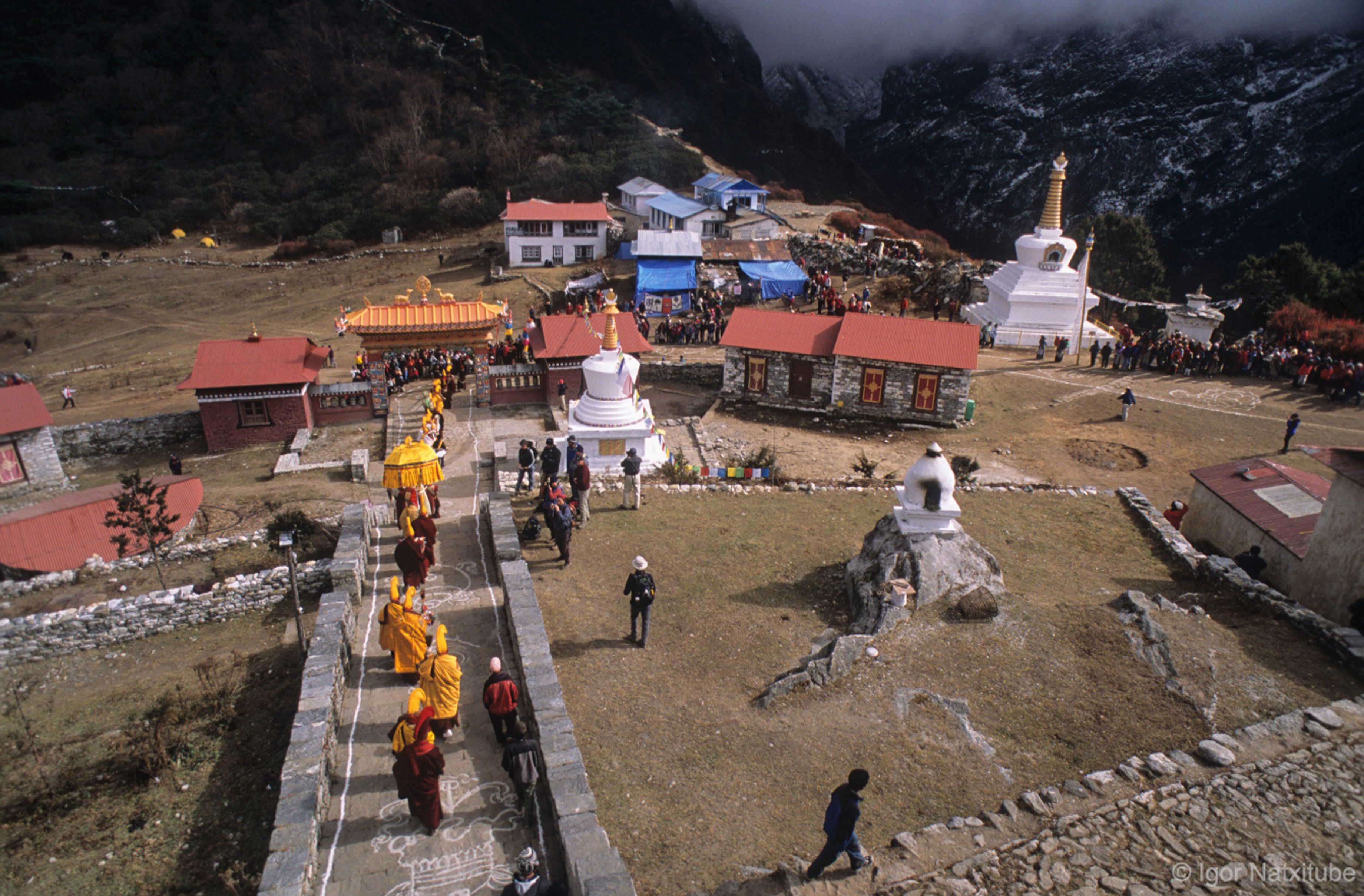
The celebrations occur once a year in different buddhist monasteries in the mountainous Khumbu Region of north-eastern Nepal, cradle of the sherpa people. During the spring (in may) at the Thame Monastery, and in the autumn on the border of november and december, at the Tengboche Monastery, located at the foot of the sacred Ama Dablam mountain.
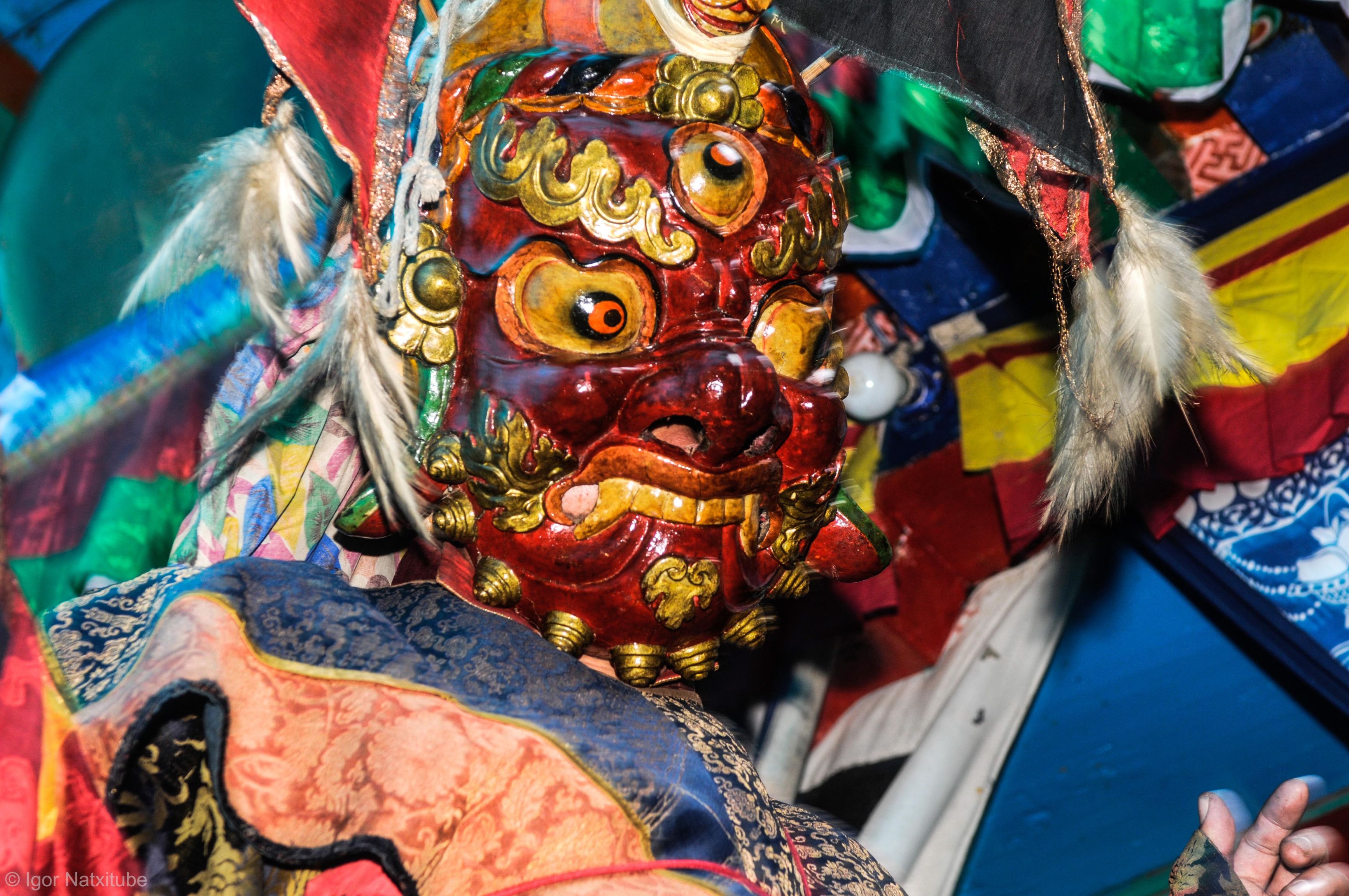
They consist of a series of religious ceremonies officiated by monks or lamas. A total of nine days of meditations and one culminating three-day act; a theatrical play with impressive colorful costumes and head dresses.
On the 1st day, the lamas dance under the attentive gaze of their superiors.
The 2nd day offerings of “katas” (white silk scarves) and money are made to receive blessings.
The 3rd day is the most animated and colorful. It is a masqueraded dance that begins with an introductory prologue, followed by 13 acts or scenes, in which different characters appear, dancing carefully choreographed pieces, that have been passed down through the generations via the oral tradition. The monks wear different masks of esoteric and satiric themes, that started being prepared a month earlier, and are only worn for this festival. The masked dance lasts for 7 hours, during which the lamas dance, without interruption, until reaching a moment of ecstasy, and only stop twice. At those pauses, comical characters appear that joke with the public and with the fundamental dogmas of buddhism. These comical interludes are guided by lamas that represent an old man, a drunk, and a tourist, that play with the organizers and bring out a lot of laughter out of the local audience.
The origins and meaning of the dances are uncertain and complex, but apparently represent the universal theme of the battle and victory of good over evil. It has also been interpreted as a sacred drama exemplifying the triumph of the Gelukpa order (yellow head pieces) over one of the ancient animist religious beliefs of Tibet known as “Bon”. In fact, even though the origins are unclear, it is thought that the objective was to initiate into the buddhist doctrine the local populations, namely the sherpa, and to bring to light certain moral and ethical values.